People sell this book for $29 or more online...

Receive a roadmap that will make your autism parenting journey easier .
A Mother’s Guide to Autism
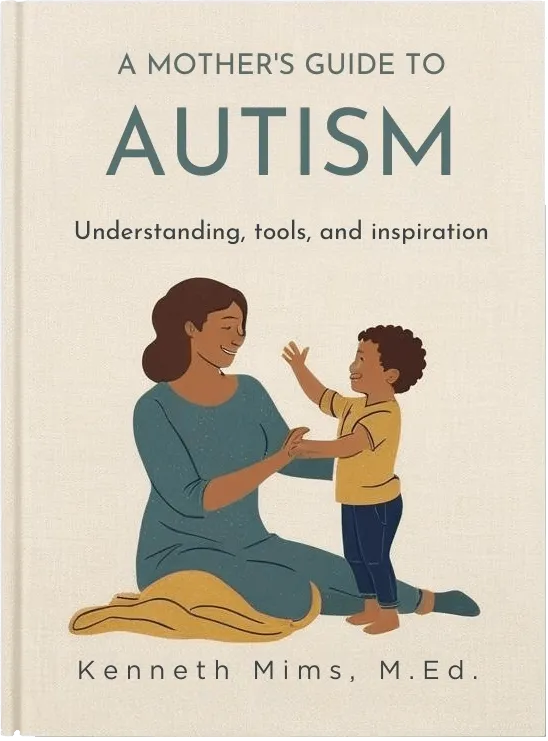

Here's what you get:
FREE Copy of A Mother's Guide to Autism
FREE Access to Autism Parent
Mini-Course
Total value: $99.00
FREE Today $0.00

"Best purchase ever!"
“This guide provided the tools and inspiration I needed. It helped me celebrate my daughter’s uniqueness and taught me how to advocate for her needs. I recommend it to every parent navigating autism.” - Cristine
From Confusion and Fear
to Hope and Progress..
Make sure your sound is turned on! Pls wait for video to fully load
Receive Answers to Frequently
Asked Questions
Question 1: What types of therapies are available for children with autism?
There are several evidence-based therapies for children with autism, including Applied Behavior Analysis (ABA), speech and language therapy, occupational therapy, and social skills training. The best approach depends on your child’s unique needs and strengths, and a combination of therapies may be recommended.
Question 2: What is an IEP and how does it help my child?
An Individualized Education Program (IEP) is a legally binding document developed for students with disabilities in public schools. It outlines your child’s specific learning goals, the services and supports they will receive, and how progress will be measured. IEPs are designed to ensure your child receives a free and appropriate public education tailored to their needs.
Question 3: How do I choose the right school for my autistic child?
Choosing the right school involves considering your child’s learning style, social needs, and the supports offered by each school. Visit potential schools, ask about their experience with autism, available support services, and inclusion practices. Collaborate with your child’s team to find an environment where your child can thrive.
Question 4: How can I effectively communicate and collaborate with my child’s school team?
Building a strong relationship with your child’s school team involves regular communication, attending meetings, and sharing insights about your child’s needs and strengths. Ask questions, keep records of meetings, and advocate for your child’s rights. Open, respectful dialogue is key to ensuring your child receives the support they need.
We understand parents of autistic chidren need a positive & empowered community.